Key Takeaways
- A plan beats willpower: the proven order is list debts → starter emergency fund → budget → choose a payoff method → attack one debt at a time.
- Two main strategies: the snowball (smallest balance first) builds momentum; the avalanche (highest interest first) saves the most money.
- High-interest debt is the priority: the average credit card charges about 21% APR (Federal Reserve), so credit card balances usually cost the most and should be tackled first by the math.
- Get legitimate help free: nonprofit credit counseling through the NFCC and resources from the CFPB are trustworthy; for-profit “debt-relief” and settlement companies are risky and often charge high fees.
- Best first step: write down every debt today — you can’t make a plan for debt you haven’t fully faced.
Getting out of debt is one of the most common and most stressful financial goals — and it’s far more achievable with a clear plan than with willpower alone. Americans are carrying record debt: total U.S. household debt reached about $18.8 trillion in early 2026, including roughly $1.2 trillion in credit card balances, according to the Federal Reserve Bank of New York. The good news is that the path out is well-established: a handful of ordered steps and a payoff strategy that fits how you stay motivated. This guide walks you through the entire plan, compares the snowball and avalanche methods with real numbers, and points you to legitimate help while steering you clear of debt-relief scams.
This is the hub for getting out of debt at FloridaIndependent. Below you’ll find why payoff matters, the types of debt and which to prioritize, a 7-step plan, the best payoff strategies with worked examples, a snowball-versus-avalanche comparison, answers to the questions people ask most (credit cards, low income, consolidation, negotiation, settlement, and bankruptcy), where to get trustworthy help, and a Florida-specific section. Everything here is educational, not financial or legal advice — for guidance on your situation, talk to a nonprofit credit counselor or a licensed professional. For the bigger picture of managing your money, see our complete guide to personal finance.
Table of Contents
- 1 Why Is Paying Off Debt Important?
- 2 What Are the Different Types of Debt?
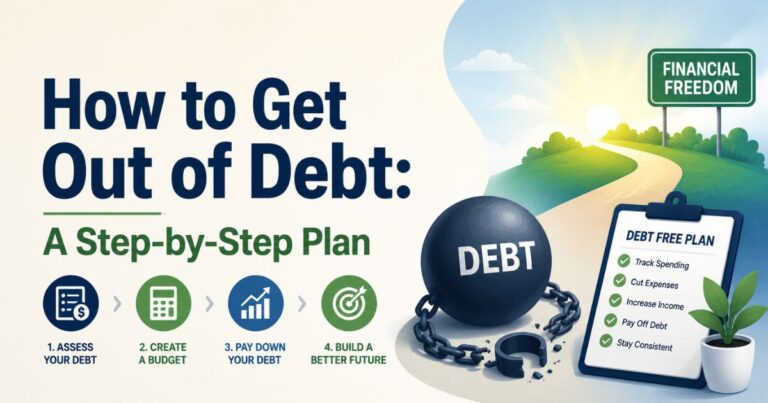
- 3 How to Get Out of Debt in 7 Steps
- 3.1 Step 1. List All Your Debts in One Place
- 3.2 Step 2. Build a Small Starter Emergency Fund
- 3.3 Step 3. Build a Budget That Frees Up Cash
- 3.4 Step 4. Choose a Debt Payoff Strategy
- 3.5 Step 5. Cut Expenses and Increase Income
- 3.6 Step 6. Consider Consolidating or Negotiating
- 3.7 Step 7. Track Progress and Stay Motivated
- 4 What Are the Best Debt Payoff Strategies?
- 5 Debt Snowball vs Debt Avalanche: Which Is Better?
- 5.1 How Do You Pay Off Credit Card Debt?
- 5.2 How Much of Your Income Should Go Toward Debt?
- 5.3 How Do You Pay Off Debt on a Low Income?
- 5.4 What Is Debt Consolidation and Is It Worth It?
- 5.5 How Do You Negotiate With Creditors?
- 5.6 When Should You Consider Debt Settlement or Bankruptcy?
- 5.7 What Happens If You Don’t Pay Your Debt?
- 5.8 Will Paying Off Debt Improve Your Credit Score?
- 5.9 Can You Reduce or Negotiate Medical Debt?
- 5.10 How Do You Stay Motivated While Paying Off Debt?
- 5.11 What Are the Most Common Debt-Payoff Mistakes?
- 5.12 Where Should You Keep Your Starter Emergency Fund?
- 5.13 How Do You Handle Debt Collectors?
- 6 Where Can You Get Help With Debt?
- 7 What Are the Best Apps and Tools to Pay Off Debt?
- 8 How Do You Stay Debt-Free After Paying Off Debt?
- 9 Frequently Asked Questions About Getting Out of Debt
Why Is Paying Off Debt Important?
Paying off debt is important because debt costs you money in interest, limits your financial freedom, and is a major source of stress — and high-interest debt in particular drains income that could build wealth. With the average credit card charging about 21% APR according to the Federal Reserve, a carried balance grows fast: every dollar of interest is money you’ve earned but don’t get to keep. Becoming debt-free frees up cash flow, reduces anxiety, and lets you redirect money toward savings, investing, and goals that actually move your life forward.
The interest cost is the clearest reason. A $5,000 credit card balance at 21% APR, paid only at the minimum, can take many years to clear and cost thousands of dollars in interest alone — often more than the original balance. Paying it off faster doesn’t just remove the debt; it stops the interest meter and returns that money to you. The higher the rate, the more urgent the payoff, which is why credit cards and other high-rate debt come first in any sensible plan.
Beyond the math, debt carries a real psychological weight. Money worries are among the most-cited sources of stress, and the constant pressure of payments can affect sleep, relationships, and decisions. Getting out of debt restores a sense of control. With U.S. household debt at record levels — about $18.8 trillion according to the New York Fed — you’re far from alone in tackling this, and the relief of a zero balance is both financial and emotional. The goal isn’t just lower numbers; it’s the freedom that comes with them.
There’s also an opportunity cost worth naming. Every dollar going to credit card interest is a dollar that can’t go toward an emergency fund, retirement, a home, or simply breathing room in your budget. High-interest debt quietly works against your future self: while compound interest builds wealth for investors, it builds the bank’s profit when you carry a balance. Clearing high-rate debt flips that dynamic — the money that was feeding interest now becomes money you can save and invest, where compounding finally works for you instead of against you. That’s why paying off expensive debt is often the highest-return financial move available to someone carrying it: a guaranteed return equal to the interest rate you stop paying, with no risk.
What Are the Different Types of Debt?
Debt falls into a few main categories, and the most useful distinction is between “good” debt (which can build wealth or has low interest) and “bad” debt (high-interest debt that drains money). Knowing which type you have tells you what to prioritize: high-interest revolving debt like credit cards costs the most and should be attacked first, while low-rate, fixed debt like a mortgage is far less urgent. Not all debt is equally harmful, and a smart payoff plan targets the expensive debt without panicking over the cheap kind.
The common types of debt:
- Credit card debt (revolving, high-interest): typically ~21% APR or higher, no fixed payoff date — the most expensive common debt and usually the top priority.
- Personal loans: fixed-rate installment loans, often used to consolidate other debt; rates vary widely by credit.
- Auto loans: secured by the vehicle, usually moderate fixed rates over 3–7 years.
- Student loans: federal or private; often lower rates and flexible options, so rarely the first target.
- Mortgages: secured by your home, typically the lowest-rate debt — generally considered “good” debt and not a payoff emergency.
- Medical debt: often no or low interest and with patient protections; important but rarely the highest-rate priority.
The good-versus-bad framing is a guide, not a rule. “Good” debt (a mortgage, sometimes student loans) tends to have low interest and finances an asset or your earning power; “bad” debt (credit cards, payday loans) carries high interest and finances consumption.
| Debt type | Typical interest | Good or bad? | Payoff priority |
|---|---|---|---|
| Payday loans | Triple-digit effective | Bad (predatory) | Escape first |
| Credit cards | ~21% APR | Bad | High |
| Personal loans | ~7%–20%+ | Depends on rate | Medium–high |
| Auto loans | ~5%–10% | Neutral | Medium |
| Student loans | ~4%–8% | Often “good” | Lower |
| Mortgages | Lowest, fixed | “Good” | Lowest |
When you build your payoff plan, rank debts by interest rate, not by balance or emotion — the highest-rate debt is mathematically the most important to eliminate, regardless of how big or small it is. Payday loans, with effective rates that can reach the triple digits, are the most damaging of all and should be escaped as fast as possible.
One more distinction matters: secured versus unsecured debt. Secured debt is backed by collateral — a mortgage by your home, an auto loan by your car — so the lender can repossess the asset if you don’t pay, but rates are usually lower. Unsecured debt (credit cards, personal loans, medical bills) has no collateral, so it carries higher rates and is what nonprofit debt management plans typically address. This matters for payoff strategy and risk: missing a secured-debt payment risks losing the asset, so you protect those minimums, while high-rate unsecured debt is usually where your extra payments do the most good. It’s also why credit cards — unsecured and high-rate — sit at the top of most payoff plans.
How to Get Out of Debt in 7 Steps
Getting out of debt comes down to seven ordered steps: list all your debts, build a small starter emergency fund, create a budget that frees up cash, choose a payoff strategy, cut expenses and increase income, consider consolidating or negotiating, and track your progress. The order matters — the emergency fund keeps a surprise expense from sending you deeper into debt, and the budget creates the money you’ll throw at your balances. Work the steps in sequence, and the overwhelming problem of “I’m in debt” becomes a series of manageable actions.
Step 1. List All Your Debts in One Place
The first step is creating a complete list of every debt you owe — the creditor, balance, interest rate, minimum payment, and due date for each. This matters because you cannot make a plan for debt you haven’t fully faced, and most people underestimate their total until they see it written down. The list turns a vague, anxious feeling into concrete numbers you can act on, and it reveals which debts cost the most (highest interest) so you know where to aim.
To do it: gather statements, log in to each account, or pull a free credit report at AnnualCreditReport.com to catch anything you’ve forgotten. Put it all in one place — a spreadsheet, a notebook, or an app — with columns for balance, APR, and minimum payment. Total it up. Seeing the full picture is uncomfortable but essential; it’s the moment the problem becomes solvable. The common mistake is leaving debts off the list (a forgotten store card, a medical bill in collections), which undermines the whole plan. A simple free spreadsheet or a debt-tracker app is all the tool you need here.
Step 2. Build a Small Starter Emergency Fund
The second step is saving a small starter emergency fund — typically around $1,000, or one month of essential expenses — before you throw everything at debt. This matters because without a cash buffer, the next unexpected car repair or medical bill goes straight onto a credit card, undoing your progress and trapping you in a cycle. A small cushion breaks that cycle: it lets you handle surprises without borrowing, so your debt payoff actually sticks.
To do it: open a separate savings account (so the money isn’t easy to spend) and build it up quickly with any spare cash — sell unused items, pause extras, or use a windfall. The starter fund is intentionally small because the goal is to get to aggressive debt payoff fast; you’ll build a fuller 3–6 month fund after the high-interest debt is gone. The common mistake is either skipping the buffer entirely (and relapsing into debt at the first surprise) or over-saving a huge fund while high-interest debt keeps compounding. Strike the balance: a small buffer first, then attack debt. For more on building this cushion, see our guide on how to save money with practical tips that actually work.
Step 3. Build a Budget That Frees Up Cash
The third step is building a budget that shows where your money goes and frees up cash to put toward debt. This matters because debt payoff is powered by the gap between what you earn and what you spend — and a budget is how you find and grow that gap. Without one, money leaks into untracked spending; with one, you can redirect that money to your payoff plan on purpose. The budget is the engine of the whole process.
To do it: list your income and all expenses, then categorize spending into needs, wants, and debt payments. A simple framework like 50/30/20 (50% needs, 30% wants, 20% debt and savings) is a starting point, but when you’re attacking debt you’ll often flip more toward payoff. Find cuts in the “wants” category and direct that money to your target debt. Review and adjust monthly. The common mistake is making an unrealistic budget you abandon in a week — build one you can actually live with, then tighten gradually. A budgeting app or a simple spreadsheet makes this far easier. For a full walkthrough, see our beginner’s guide to budgeting.
The number to watch is your monthly surplus — income minus all spending and minimum payments. That surplus is your “debt payoff power,” and growing it is the single most effective thing you can do to speed up your progress. Even finding an extra $100 a month in your budget and sending it to your target debt can shave months off your timeline and hundreds off your interest. Treat every dollar you free up as ammunition for the payoff plan, and revisit the budget each month to look for more.
Step 4. Choose a Debt Payoff Strategy
The fourth step is choosing a payoff strategy — most commonly the debt snowball (smallest balance first) or the debt avalanche (highest interest rate first) — so you attack one debt at a time instead of spreading yourself thin. This matters because focus is what gets debt paid off: paying minimums on everything makes slow progress everywhere, while concentrating every extra dollar on one target debt (and minimums on the rest) clears debts one by one and builds unstoppable momentum. The strategy you pick should match what keeps you going.
To do it: decide whether you’re motivated more by quick wins (snowball — you’ll knock out the smallest balance first and feel progress fast) or by saving the most money (avalanche — you’ll target the highest-interest debt first, which is mathematically optimal). Either works; the best strategy is the one you’ll stick with. Order your debts accordingly, then put every extra dollar toward debt number one while paying minimums on the rest. The common mistake is trying to pay extra on all debts at once, which dilutes your impact. Pick one method and commit. The next sections break down each strategy with real numbers.
Step 5. Cut Expenses and Increase Income
The fifth step is widening the gap between income and spending — cutting expenses and adding income — so you have more money to throw at debt and pay it off faster. This matters because the speed of your payoff is directly tied to how much extra you can put toward it each month; even an extra $100–$300 a month can cut years off your timeline. You attack the problem from both sides: spend less and earn more.
To do it on the expense side: cancel unused subscriptions, renegotiate bills (insurance, phone, internet), cut dining out, and pause non-essential spending temporarily. On the income side: ask for a raise, work overtime, sell unused items, or start a side hustle. Even a few hundred dollars a month of extra income, sent entirely to debt, accelerates payoff dramatically. The common mistake is cutting so brutally that you burn out and binge-spend — keep small sustainable pleasures and focus on the biggest, least painful cuts first. For ideas to earn more, see our guide on how to make money online with real side hustle ideas.
Step 6. Consider Consolidating or Negotiating
The sixth step is considering tools that lower your interest or payments — consolidating multiple debts into one lower-rate loan, transferring balances to a 0% card, or negotiating with creditors. This matters because if you’re paying 21%+ on credit cards, cutting the rate means more of each payment reduces the balance instead of feeding interest. These tools don’t erase debt, but they can make your payoff faster and cheaper when used carefully.
To do it: explore a debt consolidation loan or a balance-transfer card if you qualify (good credit gets the best terms), or call your creditors directly to ask for a lower interest rate or a hardship plan — many will work with you. For high-rate debt you can’t manage, a nonprofit credit counselor can set up a debt management plan that consolidates payments and often lowers rates. The common mistake is using consolidation as a fix while continuing to overspend, which leaves you with the consolidated loan plus new card balances. Consolidation works only alongside the budgeting and behavior changes in the earlier steps — and avoid for-profit “debt-relief” companies that charge high fees (covered later). The detailed strategy breakdowns are in the next section.
Step 7. Track Progress and Stay Motivated
The seventh step is tracking your progress and keeping yourself motivated, because debt payoff is a months-to-years marathon and seeing progress is what sustains it. This matters because motivation fades when the goal feels distant; visible progress — a shrinking balance, a debt crossed off — provides the regular wins that keep you going. Tracking also catches problems early, like a month where spending crept back up.
To do it: use a debt-payoff tracker (an app, a spreadsheet, or even a colored-in chart on the fridge) to watch balances fall and celebrate milestones — each debt eliminated, each $1,000 paid off. Automate payments so you never miss one, and review your plan monthly to adjust as income or expenses change. The common mistake is “going dark” on your numbers when progress feels slow, which is exactly when people drift off-plan. Stay connected to the data and reward milestones (cheaply) to keep morale up. A free debt-payoff app makes tracking effortless and shows your projected debt-free date, which is powerfully motivating.
What Are the Best Debt Payoff Strategies?
The best debt payoff strategies are the debt snowball, the debt avalanche, debt consolidation, balance transfers, and nonprofit debt management plans — each suited to a different situation. The snowball and avalanche are repayment orders you can use on your own; consolidation and balance transfers restructure debt into a lower-rate format; and a debt management plan brings in a nonprofit counselor to coordinate. Below, each strategy is explained with a short worked example, its pros and cons, and who it fits best. The figures are illustrative to show the mechanics.
| Strategy | How it works | Best for | Main risk |
|---|---|---|---|
| Debt snowball | Smallest balance first | Needing motivation | More total interest |
| Debt avalanche | Highest interest first | Saving the most money | Slower first win |
| Consolidation loan | Combine into one lower-rate loan | Good credit, high-rate debt | Re-running up cards |
| Balance transfer | Move to 0% intro card | Payoff within promo window | Rate jumps after promo |
| Debt management plan | Nonprofit coordinates payments | Overwhelming unsecured debt | Multi-year commitment |
The Debt Snowball Method
The debt snowball method means paying your debts from smallest balance to largest, regardless of interest rate — you pay minimums on everything and throw every extra dollar at the smallest balance until it’s gone, then roll that payment to the next smallest. It works because of motivation: knocking out a whole debt quickly gives a psychological win that keeps you going, and the freed-up payment “snowballs” into bigger and bigger amounts.
Worked example: say you have three debts — $500 (store card), $3,000 (credit card), $8,000 (car loan) — with $300 a month extra to put toward debt. The snowball targets the $500 first; with extra payments it’s gone in about two months. You then roll its minimum plus your $300 into the $3,000 debt, clearing it much faster, then roll everything into the $8,000. Each payoff makes the next one quicker.
Pros and cons: the pro is powerful momentum and a high success rate because people stick with it. The con is that ignoring interest rates can cost more in total interest than the avalanche if your highest-rate debt isn’t your smallest. Best for: people who need motivation and quick wins to stay on track — which, behaviorally, is most people.
The Debt Avalanche Method
The debt avalanche method means paying your debts from highest interest rate to lowest — you pay minimums on everything and throw every extra dollar at the highest-rate debt first, then move to the next highest. It works because it’s mathematically optimal: attacking the most expensive debt first minimizes the total interest you pay and gets you debt-free in the least time (or lowest cost), assuming you stay disciplined.
Worked example: say you have a $3,000 credit card at 22%, a $5,000 personal loan at 12%, and a $500 store card at 26%. The avalanche targets the 26% store card first (highest rate), then the 22% credit card, then the 12% loan — putting every extra dollar toward the costliest balance. Compared with the snowball, you’d pay less total interest because you’re killing the high-rate debt soonest.
Pros and cons: the pro is the lowest total interest cost and fastest payoff by the math. The con is that the first target may be a large balance, so it can take a while to see a debt fully disappear — which tests motivation. Best for: disciplined people focused on saving the most money, especially when high-rate balances are large.
Debt Consolidation
Debt consolidation means combining multiple debts into a single new loan — ideally at a lower interest rate — so you have one payment instead of several, often at a lower cost. It works by replacing high-rate debts (like 21%+ credit cards) with one fixed-rate personal loan, simplifying payments and potentially saving interest. It doesn’t reduce what you owe; it restructures it.
Worked example: suppose you owe $12,000 across three credit cards averaging 22% APR. A debt consolidation loan at 12% over three years replaces them with one payment. The lower rate means more of each payment reduces principal, and you could save a meaningful amount in interest over the payoff — provided you don’t run the cards back up.
Pros and cons: the pros are one simpler payment, a potentially lower rate, and a fixed payoff date. The cons are that you need decent credit to get a good rate, fees may apply, and it backfires if you keep spending on the cleared cards. Best for: people with good credit and high-rate debt who have fixed the spending habits that created it.
Balance Transfer
A balance transfer means moving high-interest credit card debt onto a new card with a 0% or low introductory APR for a set period (often 12–21 months), so your payments go entirely to principal during the promo window. It works by pausing interest temporarily, letting you make real progress fast — if you pay the balance down before the promo rate expires.
Worked example: you transfer a $6,000 balance from a 22% card to a 0% intro card with an 18-month promo and a 3% transfer fee ($180). If you pay about $345 a month, you clear the $6,000 within the 18 months and pay only the $180 fee instead of hundreds in interest. Miss that window, though, and the remaining balance reverts to a high standard rate.
Pros and cons: the pro is 0% interest for the promo period, which can save a lot. The cons are a transfer fee (typically 3–5%), the need for good credit to qualify, and the risk of the rate jumping after the intro period. Best for: people with good credit and a balance they can realistically pay off within the promo window.
Debt Management Plan (DMP)
A debt management plan (DMP) is a program run by a nonprofit credit counseling agency that consolidates your unsecured debt payments into one monthly payment to the agency, which distributes it to your creditors — often after negotiating lower interest rates or waived fees. It works by combining professional negotiation with a structured single payment, typically clearing the debt in three to five years. It’s not a loan and not debt settlement; you repay what you owe, usually at a lower rate.
Worked example: you owe $15,000 across several cards at high rates. A nonprofit counselor reviews your budget and sets up a DMP; creditors agree to reduce your rates, so a single payment of, say, $400 a month pays everything off in around four years — faster and cheaper than minimums alone, with the collection calls stopping.
Pros and cons: the pros are lower rates, one payment, professional support, and full repayment that’s gentler on credit than settlement. The cons are a small monthly fee, having to close enrolled cards, and the multi-year commitment. Best for: people overwhelmed by high-rate unsecured debt who want structured nonprofit help — and it should be your first call before any for-profit debt-relief company.
Debt Snowball vs Debt Avalanche: Which Is Better?
Neither the snowball nor the avalanche is universally better — the avalanche saves more money, while the snowball keeps more people motivated enough to finish. The avalanche (highest interest first) minimizes total interest and is mathematically optimal; the snowball (smallest balance first) delivers quick wins that build momentum. The “better” method is the one you’ll actually stick with to zero, because a strategy you abandon saves nothing.
| Factor | Debt Snowball | Debt Avalanche |
|---|---|---|
| Payoff order | Smallest balance first | Highest interest rate first |
| Total interest paid | More (usually) | Least |
| Time to debt-free | Slightly longer (usually) | Shortest |
| Motivation | High — fast, visible wins | Lower — first win can be slow |
| Best for | People who need momentum | Disciplined, math-focused payers |
The practical guidance: if you’ve struggled to stick with debt payoff before, choose the snowball — the early wins matter more than the modest extra interest. If you’re disciplined and your highest-rate debt is large, choose the avalanche to save the most. A common hybrid is to knock out one tiny balance first for the morale boost, then switch to avalanche order for the rest. Whichever you pick, the single most important factor is consistency: every extra dollar on one target debt, every month, until it’s gone.
To see the trade-off concretely, imagine three debts: a $500 store card at 26%, a $4,000 credit card at 22%, and a $2,000 medical bill at 0%, with $400 a month extra to apply. The snowball pays the $500 first (quick win), then the $2,000 medical bill, then the $4,000 card — feeling great early but leaving the 22% balance for last. The avalanche pays the $500 card (which also happens to be the highest rate at 26%), then the $4,000 at 22%, then the 0% medical bill last — saving more interest because the costly 22% debt is cleared sooner. In a case like this, the avalanche might save a few hundred dollars in interest, while the snowball clears two separate debts faster for momentum. Both get you debt-free; the “right” one is whichever keeps you paying.
How Do You Pay Off Credit Card Debt?
You pay off credit card debt by stopping new charges, paying far more than the minimum, and targeting your cards by either smallest balance (snowball) or highest interest rate (avalanche) — while considering a balance transfer or consolidation to cut the ~21% interest. Credit cards are usually the most expensive debt, so they’re typically the top priority. The key is to pay aggressively and consistently while not adding new charges that refill the balance.
A practical approach: list your cards with balances and APRs, pick snowball or avalanche order, and throw every extra dollar at the target card while paying minimums on the rest. If you have good credit, a 0% balance-transfer card can pause interest for 12–21 months so payments hit principal. Always pay more than the minimum — minimum-only payments on a high-rate card can take many years and cost more in interest than the original balance. The behavior change matters as much as the math: keep the cards out of daily use until they’re paid off. For more on managing cards and your credit, see our complete guide to credit scores and credit cards.
How Much of Your Income Should Go Toward Debt?
As a general guideline, your total monthly debt payments should stay under about 36% of your gross income, a benchmark many lenders use to judge whether debt is manageable. This “debt-to-income ratio” (DTI) compares your monthly debt payments to your monthly income: housing ideally stays around 28% or less, and total debt (housing plus cards, loans, and other payments) under 36%, with 43% a common upper limit for mortgage qualification. The lower your DTI, the more breathing room and borrowing power you have.
To find yours, add up your monthly debt payments (mortgage or rent, minimum card payments, auto and student loans) and divide by your gross monthly income. If you’re above 36%, that’s a signal to prioritize payoff and avoid new debt; well above 43% often indicates real strain worth addressing with a budget and possibly a nonprofit counselor. When you’re actively attacking debt, you’ll often push far more than 20% of your income toward payoff temporarily — that’s fine and intentional. The DTI benchmark is about sustainable long-term levels, not the aggressive short-term push to get debt-free. Lowering your DTI by paying down balances also improves your credit and your future loan options.
How Do You Pay Off Debt on a Low Income?
You pay off debt on a low income by widening the gap between income and expenses any way you can — trimming every non-essential cost, adding even small amounts of income, and using the snowball method for motivation while paying minimums on everything else. It’s harder on a tight budget, but it’s absolutely possible; the principles are the same, just applied with more focus on essentials and more creativity on income. Small, consistent extra payments still add up over time.
Practical moves: prioritize needs (housing, food, utilities, transportation, minimum debt payments) and cut everything non-essential temporarily. Call creditors to ask for lower interest rates or hardship plans — many have programs for people who are struggling. Look into a nonprofit credit counselor (free) for a debt management plan, and check eligibility for assistance programs that free up cash. On income, even a few extra hours, a small side gig, or selling unused items provides dollars to send to debt. The snowball method shines on a low income because the quick wins sustain motivation when progress is necessarily slow. Be especially wary of payday loans and for-profit debt-relief offers, which prey on tight budgets and usually make things worse.
What Is Debt Consolidation and Is It Worth It?
Debt consolidation combines multiple debts into a single new loan, ideally at a lower interest rate, and it’s worth it when you can get a meaningfully lower rate and you’ve stopped the overspending that created the debt. It simplifies several payments into one and can save interest, but it doesn’t reduce what you owe and isn’t a cure for a spending problem. Whether it’s worth it depends on the rate you qualify for, any fees, and your discipline.
Consolidation makes sense when, for example, you can replace several 21%+ credit cards with one personal loan at 11–13%, turning a tangle of payments into a single fixed payment with a clear payoff date and lower interest. It does not make sense if you’ll run the cards back up (leaving you with the loan plus new balances), if the new rate isn’t actually lower after fees, or if your credit only qualifies you for a high-rate loan. The honest test: consolidation is a tool to make an already-working payoff plan cheaper and simpler — not a way to feel like you’ve solved debt without changing the habits behind it.
How Do You Negotiate With Creditors?
You negotiate with creditors by calling them directly, explaining your situation honestly, and asking for specific relief — a lower interest rate, a hardship or payment plan, waived fees, or a settlement amount. It works more often than people expect, because creditors generally prefer getting paid something over sending an account to collections. The key is to be polite, specific, and persistent, and to get any agreement in writing before you pay.
A simple script: “I’ve been a customer since [year] and I’m committed to paying what I owe, but I’m struggling at [21%] interest. Can you lower my rate or set up a hardship plan?” If the first representative says no, politely ask for a supervisor or call back another day. For settling an old debt for less than the full balance, ask what lump sum they’d accept to consider the account satisfied, and get the agreement in writing. Two cautions for sensitive situations: get every promise in writing before paying, and know that forgiven debt can be treated as taxable income, and that on an old debt, making a payment can restart the statute of limitations (covered in the Florida section). When in doubt, a nonprofit credit counselor can negotiate on your behalf.
When Should You Consider Debt Settlement or Bankruptcy?
Debt settlement and bankruptcy are last-resort options for debt you genuinely cannot repay — and before either, you should talk to a nonprofit credit counselor, because there may be better paths. Debt settlement (paying a lump sum for less than you owe) damages your credit and can have tax consequences; bankruptcy is a legal process that discharges or restructures debt with serious, long-lasting credit effects but also legal protections and a fresh start. Neither is a moral failing — they’re tools for specific, difficult situations.
Consider these options when your debt is truly unmanageable: your required payments exceed what you can pay even after budgeting and counseling, or the math shows you’ll never realistically clear it. Before acting, contact a nonprofit credit counselor (NFCC) to review every alternative first; a debt management plan or negotiation may resolve things without settlement or bankruptcy. If you do pursue settlement, be extremely cautious of for-profit debt-relief companies — many charge high fees, tell you to stop paying creditors (which adds late fees and lawsuits), and leave people worse off; the CFPB warns about exactly these risks. If you’re weighing bankruptcy, consult a licensed bankruptcy attorney, who can explain Chapter 7 versus Chapter 13 and the consequences for your situation. This is educational information, not legal or financial advice — these decisions deserve professional guidance tailored to you.
Should You Save or Pay Off Debt First?
You should do a little of both, in order: build a small starter emergency fund first (about $1,000), then aggressively pay off high-interest debt, then build a fuller 3–6 month emergency fund. The starter fund matters because without any savings, a surprise expense forces you back into debt — so a small buffer protects your payoff progress. After that, high-interest debt (like 21% credit cards) costs far more than a savings account earns, so paying it off beats saving more.
The logic is about interest rates and risk. A small cash cushion is worth temporarily pausing extra debt payments because it prevents relapse. But once that buffer exists, every dollar matters more against a 21% debt than in a savings account earning a few percent — the guaranteed “return” from eliminating high-rate interest is hard to beat. The exception: always contribute enough to any employer 401(k) match first, since that’s an immediate 100% return. For how to build your savings cushion the right way, see our guide on how to save money.
Should You Pay Off Debt or Invest?
Whether to pay off debt or invest depends on the interest rate: pay off high-interest debt (roughly 6–8%+ and especially credit cards) before investing, but you can invest alongside paying low-interest debt. Eliminating a 21% credit card is a guaranteed 21% “return,” which beats the stock market’s long-term average — so high-rate debt wins. Low-rate debt (like a mortgage) is cheap enough that investing the money may build more wealth over time.
The deciding factor is comparing your debt’s interest rate to your expected investment return. Above roughly 6–8%, paying off the debt usually wins because the guaranteed savings beat uncertain market returns; below that, the math can favor investing, especially in tax-advantaged accounts. One universal exception: capture any employer 401(k) match before paying extra on debt, because a 50–100% match is an instant return nothing else matches. For most people in credit card debt, the answer is clear — clear the high-rate debt first, then invest. For how to begin once you’re ready, see our guides on investing for beginners and retirement planning.
Does Debt Consolidation Hurt Your Credit?
Debt consolidation can cause a small, temporary dip in your credit score, but it often helps your credit over time. Applying for a consolidation loan or balance-transfer card triggers a hard inquiry (a few points, briefly), and opening a new account lowers your average account age slightly. But consolidation can also lower your credit utilization and, by making payments more manageable, helps you pay on time — the biggest factor in your score.
The net effect is usually positive if you use consolidation responsibly: pay the new loan on time, and don’t run the paid-off cards back up. The short-term dip from the inquiry and new account typically recovers within months, while the benefits — lower utilization and consistent on-time payments — build your score over the longer term. Where consolidation does hurt is if you miss payments on the new loan or accumulate fresh card debt on top of it. For how credit scores work and what moves them, see our guide to credit scores and credit cards.
What Happens If You Don’t Pay Your Debt?
If you don’t pay your debt, the consequences escalate over time: late fees and penalty interest first, then damage to your credit score, then the account being sent to collections, and potentially a lawsuit and wage garnishment for unpaid debts. The exact path depends on the debt and how long it goes unpaid, but ignoring debt almost always makes it more expensive and more stressful — which is why facing it with a plan, or getting help, beats avoidance.
The typical progression: a missed payment triggers late fees and can raise your interest rate; after about 30 days, the late payment hits your credit report and lowers your score; after several months, the creditor may charge off the account and sell it to a collection agency. Collectors will then attempt to recover the debt, and for some debts they can sue, potentially leading to a court judgment, wage garnishment, or bank levy. Importantly, you have legal protections: the Fair Debt Collection Practices Act limits how collectors can behave (no harassment, no threats, no calling at unreasonable hours), and debts eventually pass the statute of limitations for lawsuits (five years for most written contracts in Florida). If you’re behind, don’t ignore it — contact the creditor, ask about hardship options, or call a nonprofit credit counselor before the situation escalates.
Will Paying Off Debt Improve Your Credit Score?
Yes, paying off debt generally improves your credit score over time, especially paying down credit card balances, because it lowers your credit utilization — one of the biggest factors in your score. Making consistent on-time payments as you pay down debt also builds positive payment history, the single largest scoring factor. The improvement isn’t always instant, and one quirk surprises people: closing a paid-off card can briefly nudge your score down by raising utilization on remaining cards or shortening account history.
To get the most credit benefit from payoff: prioritize paying down revolving credit card balances (utilization improves fast as balances drop), keep older cards open after paying them off (don’t close them, to preserve your credit history and available credit), and never miss a payment. As balances fall and on-time payments accumulate, your score typically rises. Paying off an installment loan (like a car loan) has a smaller, slower effect on your score than paying down cards, but it improves your debt-to-income ratio and frees up cash. For the full picture of what moves your score, see our guide to credit scores and credit cards.
Can You Reduce or Negotiate Medical Debt?
Yes, medical debt is often the most negotiable debt you can have — hospitals and providers frequently offer financial assistance, interest-free payment plans, charity care, and substantial discounts, especially if you ask before the bill goes to collections. Medical debt also carries special consumer protections, and unpaid medical bills under certain amounts have been removed from or given less weight on credit reports in recent years. Many people pay medical bills as billed without realizing how much room there is to reduce them.
Practical moves: always request an itemized bill and check it for errors (billing mistakes are common), ask the provider about financial assistance or charity care programs (many nonprofit hospitals are required to offer them), and request an interest-free payment plan rather than putting the bill on a credit card. You can also negotiate a lower lump-sum settlement, particularly for a bill already in collections. Because medical debt usually carries little or no interest, it’s rarely the highest-rate payoff priority — but addressing it through assistance and negotiation can dramatically cut what you owe. Don’t put a large medical bill on a 21% credit card if a 0% provider payment plan is available; that simply converts cheap debt into expensive debt.
How Do You Stay Motivated While Paying Off Debt?
You stay motivated while paying off debt by making progress visible, celebrating milestones cheaply, and connecting the payoff to a meaningful “why.” Debt payoff is a long process, and motivation naturally fades — so you build systems that supply regular wins instead of relying on willpower. Seeing a balance drop, crossing a debt off the list, and watching your debt-free date move closer are what keep people going through the months.
Concrete tactics: use a visual tracker (a chart you color in, an app showing your projected debt-free date, or a simple thermometer on the fridge) so progress is always in sight. Celebrate milestones in small, free or cheap ways — a debt cleared, every $1,000 paid off. Use the snowball method if you need momentum, since quick wins are motivating by design. Find an accountability partner or an online community of people doing the same thing. And keep your “why” front and center: the vacation you’ll take, the stress you’ll shed, the freedom of a zero balance. The math gets you out of debt, but motivation is what keeps you doing the math month after month.
What Are the Most Common Debt-Payoff Mistakes?
The most common debt-payoff mistakes are paying only the minimum, having no emergency fund (so surprises restart the debt), spreading extra payments across all debts instead of focusing on one, running up cleared cards again, and falling for debt-relief scams. Most are avoidable with the ordered plan in this guide, and avoiding them is often the difference between getting out of debt and staying stuck.
The mistakes that trap people:
- Paying only the minimum: on a high-rate card, this can take years and cost more in interest than the original balance. Always pay extra toward one target debt.
- No starter emergency fund: without a buffer, the next surprise goes on a card and undoes your progress.
- Spreading yourself thin: paying a little extra on everything makes slow progress everywhere; focus on one debt at a time.
- Re-using paid-off cards: consolidating or paying off cards, then charging them back up, leaves you deeper in debt.
- Falling for debt-relief scams: for-profit companies promising to “erase” debt for an upfront fee often make things worse — use nonprofit counseling instead.
- Ignoring the numbers: avoiding your balances when progress feels slow is when plans quietly fall apart.
The throughline is that most failures are behavioral, not mathematical — the plan works if you work it consistently and protect yourself from the surprises and scams that derail people. Build the buffer, focus your payments, change the habits, and get legitimate help when you need it.
Where Should You Keep Your Starter Emergency Fund?
Keep your starter emergency fund in a separate, easily accessible savings account — ideally a high-yield savings account at a bank or credit union, kept apart from your checking so it’s not tempting to spend. The priorities for emergency-fund storage are safety and access, not growth: you want the money insured, liquid, and reachable within a day or two when a real emergency hits, not locked up or invested where its value can drop.
A high-yield savings account is the standard choice because it’s FDIC- or NCUA-insured, lets you withdraw quickly, and earns more interest than a regular checking account while you build it. Avoid keeping your emergency fund in investments (its value can fall right when you need it) or in your everyday checking account (where it blends into spending money). Keeping it at a different bank than your main account adds a small, helpful barrier against impulse spending. For help choosing where to bank and the account types available, see our banking guide to checking, savings, and choosing a bank.
How Do You Handle Debt Collectors?
You handle debt collectors by knowing your rights, getting debt details in writing, and communicating carefully — never ignoring a lawsuit summons. Under the federal Fair Debt Collection Practices Act, collectors can’t harass you, call at unreasonable hours, threaten you, or lie about the debt, and you can request written verification of any debt they claim you owe. Knowing these rights changes the dynamic from intimidation to a manageable process.
Practical steps: when a collector contacts you, ask for a written validation notice with the original creditor, the amount, and your rights before discussing payment. Keep records of all communications. If the debt is yours and you can pay, you can negotiate (a lower lump sum or a payment plan) — but get any agreement in writing first. Two cautions specific to old debt: making a payment or signing an acknowledgment can restart the statute of limitations, and you should never ignore a court summons (failing to respond leads to an automatic judgment even on an expired debt). If collectors break the rules, you can file a complaint with the CFPB. When it feels overwhelming, a nonprofit credit counselor can help you respond.
Where Can You Get Help With Debt?
The best place to get help with debt is a nonprofit credit counseling agency, such as a member of the National Foundation for Credit Counseling (NFCC), which offers free or low-cost budgeting help and debt management plans. Government resources from the Consumer Financial Protection Bureau (CFPB) are also trustworthy and free. The crucial distinction: legitimate help is usually nonprofit and transparent, while for-profit “debt-relief” and settlement companies charge high fees and carry real risks. When you need help, start with the nonprofits.
Where to turn for legitimate help:
- Nonprofit credit counseling (NFCC): certified counselors review your budget, explain your options, and can set up a debt management plan — often at little or no cost. Reach the National Foundation for Credit Counseling to connect with a member agency.
- CFPB resources: the government’s Consumer Financial Protection Bureau guide to getting a handle on debt explains credit counseling, dealing with collectors, and how to spot bad actors.
- Your creditors directly: many offer hardship programs and lower rates if you call and ask.
- A licensed attorney: for bankruptcy questions; many offer a free initial consultation.
A clear warning about debt-relief scams: be very cautious of for-profit companies that promise to “settle your debt for pennies” or “erase” what you owe. The CFPB notes that debt settlement companies often charge expensive fees, typically tell you to stop paying your creditors (which adds late fees, penalty interest, and lawsuits), and may not settle all your debts — leaving you worse off than when you started. Charging an upfront fee before settling any debt is illegal for most debt settlement companies. If a company guarantees results, demands money upfront, or tells you to stop communicating with creditors, treat it as a red flag and choose nonprofit counseling instead. Also note that forgiven debt can be treated as taxable income, so confirm any tax consequences with a tax professional or our guide to personal taxes.
How Long Will It Take to Pay Off Your Debt?
How long it takes to pay off your debt depends on three things: your total balance, your interest rate, and how much you pay each month — and adding even a small extra payment can cut years off the timeline. The math is straightforward: higher payments and lower rates clear debt faster. The single most powerful lever is paying more than the minimum, because minimum payments are designed to keep you in debt for as long as possible.
A worked illustration shows the impact. Take a $5,000 credit card balance at 21% APR. Paying only the minimum (often around 2–3% of the balance) could take well over a decade and cost more in interest than the original $5,000. Now add a fixed extra payment: paying a steady $250 a month clears it in roughly two years with far less interest, and $400 a month clears it in well under a year and a half. The lesson is dramatic — extra payments don’t just shorten the timeline a little; they slash both the time and the total interest, because more of each payment attacks principal instead of interest. Use a free debt-payoff calculator or app to plug in your real numbers and see your debt-free date, then increase the monthly amount and watch the date jump closer.
| Monthly payment on $5,000 at 21% APR | Approx. time to pay off | Relative interest cost |
|---|---|---|
| Minimum only (~2–3%) | Well over 10 years | Highest — can exceed the balance |
| $150/month | ~4 years | High |
| $250/month | ~2 years | Moderate |
| $400/month | Under 1.5 years | Lowest |
These figures are illustrative, but the pattern holds for any balance: the more you pay above the minimum, the dramatically shorter the timeline and the less interest you pay overall. Even an extra $50–$100 a month makes a real difference.
What Are the Best Apps and Tools to Pay Off Debt?
The best debt-payoff tools are budgeting apps and debt-tracker apps that help you build a plan, see your debt-free date, and stay motivated — not “debt-relief” services. Legitimate tools fall into two buckets: budgeting apps that free up cash, and debt-payoff trackers that organize your snowball or avalanche and project your timeline. The right tool is the one you’ll actually open regularly.
Useful, legitimate tools by purpose:
- Budgeting apps (to free up cash): YNAB (You Need A Budget) is a popular zero-based budgeting app; many banks also offer free built-in budgeting tools.
- Debt-payoff trackers (to organize snowball/avalanche): apps like Undebt.it or a Debt Payoff Planner let you map your payoff order and see your debt-free date — a free spreadsheet works just as well.
- Free calculators: a debt-payoff calculator shows how extra payments change your timeline and total interest.
- Your bank’s tools: automatic payments and balance alerts keep you on track at no cost.
Keep it simple — you don’t need to pay for a fancy app to get out of debt. A free spreadsheet listing your balances, rates, and payments, plus automatic payments and a calculator, is a complete toolkit. The most important “tool” is the consistent behavior behind it. And to repeat the warning: avoid apps or services that market themselves as “debt relief,” “debt forgiveness,” or “settle for pennies” — those are not payoff tools, and many are predatory.
Where Can You Get Debt Help in Florida (and What Is the Statute of Limitations)?
In Florida, you can get free or low-cost help from nonprofit credit counseling agencies (including NFCC members serving the state), and it’s important to know that Florida’s statute of limitations on most debt is five years for written contracts (including most credit card debt) and four years for oral agreements or open accounts, under Florida Statutes §95.11. The statute of limitations is the deadline for a creditor to sue you to collect — once it passes, the debt is “time-barred.” Florida’s five-year window is shorter than many states’.
Two things every Florida resident with old debt should understand. First, the statute of limitations bars the lawsuit, not the debt — the debt still exists and can still appear on your credit report, and a collector can still ask you to pay; the protection only blocks a court judgment, and you must raise it as a defense if sued (it isn’t automatic). Second, and critically, making a payment or signing a written acknowledgment on an old debt can restart the clock, reviving a time-barred debt and giving the creditor a fresh window to sue. So before paying or signing anything on an old Florida debt, understand where you stand. For the exact rules, see Florida Statutes §95.11, and because this is a legal matter, confirm your specific situation with a licensed Florida attorney. This is educational information, not legal advice.
How Do You Stay Debt-Free After Paying Off Debt?
You stay debt-free after paying off debt by keeping the habits that got you there: living on a budget, maintaining a full emergency fund, using credit cards responsibly (paying in full each month), and avoiding lifestyle inflation. The hardest part of debt for many people isn’t paying it off once — it’s not sliding back. Building a fully funded emergency fund and a spending plan you can live with permanently is what keeps you out of debt for good.
Concrete habits that prevent relapse: finish building a 3–6 month emergency fund so surprises never require borrowing again; keep using the budget that freed up your payoff money, now redirecting it to savings and investing; pay credit card balances in full every month to enjoy the perks without the interest; and resist lifestyle inflation by giving every raise a job (savings, investing) before it disappears into spending. Automate savings so it happens without willpower. The mindset shift is from “paying off the past” to “building the future” — the same discipline, aimed forward. For the foundation, keep up the budgeting habit that made your payoff possible.
One more safeguard: keep a small running list of the upcoming irregular expenses that tend to trigger borrowing — car maintenance, insurance premiums, holidays, annual fees — and set aside a little each month for them in advance. These predictable “surprises” are what quietly push people back onto credit cards, and planning for them is the difference between staying debt-free and starting the whole cycle over.
Frequently Asked Questions About Getting Out of Debt
What Is the Fastest Way to Get Out of Debt?
The fastest way to get out of debt is to maximize the money you put toward it and target your highest-interest debt first (the avalanche method), while cutting expenses and increasing income to free up every possible dollar. Lowering your interest rate through a balance transfer or consolidation speeds things up further by sending more of each payment to principal. There’s no shortcut around paying what you owe, but focusing extra payments on the costliest debt and widening the gap between income and spending is mathematically the fastest path.
Can You Get Out of Debt on a Low Income?
Yes, you can get out of debt on a low income, though it takes longer and more focus. The same principles apply: trim every non-essential expense, add income where you can (even small amounts), and use the snowball method so quick wins keep you motivated. Nonprofit credit counselors can help for free, and many creditors offer hardship programs. Progress may be slow, but consistent small extra payments still eliminate debt over time — and avoiding payday loans and debt-relief scams matters even more on a tight budget.
Is It Better to Pay Off Debt or Build Savings?
It’s best to build a small starter emergency fund first (about $1,000), then prioritize paying off high-interest debt, then build a fuller 3–6 month emergency fund. A small cushion protects your payoff from surprise expenses, but beyond that, eliminating high-interest debt (like a 21% credit card) saves more than a savings account earns, so debt payoff usually wins. The exception is always capturing an employer 401(k) match first, since that’s an immediate, guaranteed return that nothing else beats.
What Is the Debt Snowball Method?
The debt snowball method is a payoff strategy where you pay your debts from smallest balance to largest, regardless of interest rate. You make minimum payments on everything and put every extra dollar toward the smallest balance until it’s gone, then roll that payment into the next-smallest debt. It works through motivation: eliminating a whole debt quickly gives a psychological win that keeps you going. It can cost slightly more interest than the avalanche, but its high success rate makes it the better choice for many people.
How Can You Pay Off Debt Faster?
You can pay off debt faster by paying more than the minimum, targeting one debt at a time (snowball or avalanche), lowering your interest rate through a balance transfer or consolidation, and freeing up more money by cutting expenses and adding income. The two biggest levers are the size of your extra payment and your interest rate — increasing the first and decreasing the second both accelerate payoff dramatically. Automating payments and tracking your debt-free date help you stay consistent, which is what ultimately gets debt paid off.
Should You Use Savings to Pay Off Debt?
It’s generally smart to use savings beyond a small emergency buffer to pay off high-interest debt, since a 21% credit card costs far more than savings earns. Keep about $1,000 (or a month of essentials) as a starter emergency fund so a surprise doesn’t put you back in debt, but money sitting above that earning a few percent is better used eliminating high-rate debt. Don’t drain your entire emergency fund, though — being completely cashless invites new debt the moment something breaks.