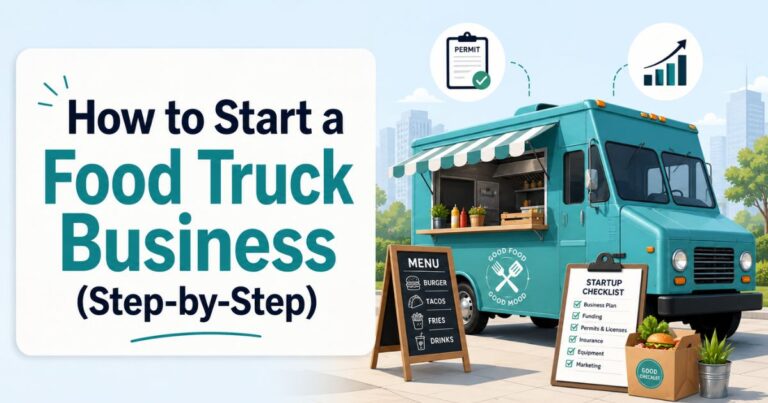
Key Takeaways
- Startup cost: $50,000–$200,000 total — used truck $40,000–$100,000, new custom build $100,000–$200,000+; a used trailer can start around $30,000–$55,000.
- Margins are thin: food trucks net roughly 3–9% on high volume; catering and events are where the money is.
- Licensing stack: business registration, a state mobile-food license, a commissary agreement, a Certified Food Protection Manager, fire and health inspections, commercial auto, and sales-tax registration.
- Commissary: most jurisdictions require one ($400–$2,000/month) unless your truck is fully self-sufficient.
- Florida advantage: under Fla. Stat. §509.102, the state DBPR license ($50 + $347/yr) covers you statewide — cities can’t charge a separate food-truck fee.
- Best first step: nail a concept, write a break-even plan, and line up a commissary before you buy the truck.
A food truck is one of the most exciting ways into the food business — far cheaper than a restaurant, mobile, and built around a single great concept. But “cheaper than a restaurant” still means tens of thousands of dollars and a serious licensing stack. This guide walks the full path: how to start, what it costs, whether it’s profitable, the licenses you need, an 11-step launch plan, food truck vs restaurant, used vs new, and the Florida-specific rules that make the state unusually food-truck-friendly. It’s part of our broader how to start a business step-by-step guide and the Business & Finance complete guide.
Figures below are 2026 benchmarks and ranges that vary by market and cuisine; legal and licensing specifics are verified against primary sources but should be confirmed for your state and county.
Table of Contents
- 1 How do you start a food truck business?
- 2 How much does it cost to start a food truck business?
- 3 Is a food truck business profitable?
- 4 What licenses and permits do you need for a food truck?
- 5 How to start a food truck business in 11 steps
- 5.1 Step 1: Develop your concept and research the market
- 5.2 Step 2: Write a business plan
- 5.3 Step 3: Register your business and get an EIN
- 5.4 Step 4: Buy or build your truck and equipment
- 5.5 Step 5: Line up a commissary (or a self-sufficient truck)
- 5.6 Step 6: Get your state mobile-food license
- 5.7 Step 7: Get food-safety certification
- 5.8 Step 8: Pass health and fire inspections
- 5.9 Step 9: Register for sales tax and get insurance
- 5.10 Step 10: Plan your parking and locations
- 5.11 Step 11: Market and launch
- 6 Food truck vs restaurant
- 7 Used vs new food truck
- 8 Tools and services for food truck owners
- 9 Starting a food truck business in Florida
- 10 Frequently Asked Questions About Starting a Food Truck Business
How do you start a food truck business?
Starting a food truck business means building a concept, registering your business, buying and outfitting a truck, passing health and fire inspections, and securing licenses, a commissary, and parking. The typical path runs concept → business plan → LLC and EIN → truck purchase and build-out → commissary agreement → state mobile-food license → food-safety certification → health and fire inspections → insurance and sales-tax registration → parking and events → launch.
The appeal versus a restaurant is real: lower startup cost, mobility to chase demand, and a menu you can keep tight. The challenge is that a food truck is simultaneously a commercial kitchen and a commercial vehicle, so you’re navigating two regulatory worlds — food safety and motor-vehicle rules — plus local zoning that dictates where you can actually park and sell. Get the order right (concept and commissary before the truck; licensing before the launch date) and you avoid the two most expensive mistakes: buying a truck you can’t legally operate, and missing the parking rules that determine whether you have customers.
How much does it cost to start a food truck business?
Starting a food truck business commonly costs $50,000 to $200,000, with the average setup running about $85,000–$120,000. The truck itself is 50–70% of that: a used truck runs $40,000–$100,000, while a new custom build costs $100,000–$200,000+. A used concession trailer (which needs a tow vehicle) can bring total startup into the $30,000–$55,000 range.
Beyond the truck, budget for the rest of the launch:
- Equipment & upgrades: $10,000–$20,000 (cooking line, refrigeration, generator, plumbing, hood/suppression).
- Licenses & permits: roughly $1,500–$2,500/year across state license, county health, fire, and local business tax.
- Commissary: $400–$2,000/month where required.
- Initial inventory: $3,000–$5,000.
- Working capital (2 months): $10,000–$20,000.
- Insurance: general liability plus commercial auto (varies widely).
The single biggest variable is the truck. Used saves money upfront but a 10-year-old truck can need $15,000–$20,000 in first-year repairs, so pay $300–$500 for a pre-purchase inspection by a commercial-kitchen-equipment technician (not just a mechanic). If you need financing to bridge the gap, see our guide to funding your business, and build the full budget with the SBA’s startup-cost worksheet before you commit.
Is a food truck business profitable?
Food trucks can be profitable, but on thin margins: most run a net profit margin of roughly 3–9%, similar to restaurants, because food costs (30–35% of revenue) and labor eat most of each sale. The advantage over a brick-and-mortar restaurant is much lower overhead — no dining room, smaller staff, mobile rent — which makes profitability more attainable if you drive volume.
The trucks that actually make money share a pattern: they pair a corporate catering pipeline (high-margin, predictable, booked in advance) with regular events and festivals (high-traffic, brand-building) rather than relying on unpredictable street vending. On roughly $300,000 in annual revenue, a median truck nets around $18,000–$27,000, implying a three-to-seven-year payback on the startup investment. The trucks that fail typically overestimate walk-up street sales, underprice their menu, and underbudget for maintenance. Profitability here is a volume-and-events game, not a margin game — location and catering bookings matter more than the menu price. (Figures are industry benchmarks; results vary widely by market, cuisine, and operator.)
What licenses and permits do you need for a food truck?
A food truck generally needs seven things: a business registration (LLC), a state mobile-food license, a commissary agreement, a food-safety manager certification, health and fire inspections, commercial vehicle registration, and sales-tax registration. The exact names and fees vary by state and county, but that stack is close to universal — a food truck is regulated as both a commercial kitchen and a commercial vehicle.
Here’s what each piece does: the state mobile-food license is your primary authority to operate (in Florida, the DBPR Mobile Food Dispensing Vehicle license); the commissary agreement proves you have a licensed commercial kitchen for prep, water, and waste; the food-safety certification (a Certified Food Protection Manager, e.g. ServSafe) is required for any licensed food establishment; health and fire inspections confirm safe food handling and safe propane/suppression setups; commercial vehicle registration covers the truck as a vehicle; and sales-tax registration lets you collect and remit tax on prepared food. Because requirements vary sharply by location — some counties add their own permits and business-tax receipts — always confirm with your state licensing agency and county health department before you launch. The Florida section below shows exactly how this works in one state.
How to start a food truck business in 11 steps
You can start a food truck business in eleven steps: develop your concept, write a plan, register, buy and outfit the truck, line up a commissary, get your state license, get food-safety certified, pass inspections, register for sales tax and insurance, plan parking, and launch. Here’s each step — what it is, why it matters, how to do it, and the mistake to avoid.
Step 1: Develop your concept and research the market
Your concept is your menu, your niche, and the events and locations you’ll target. It matters because everything downstream — the truck build, equipment, and where you park — flows from it. Research local competition, the events calendar, and where your target customers gather (office parks, breweries, festivals). Keep the menu tight; a focused menu is faster to cook, cheaper to stock, and easier to execute from a small kitchen. The common mistake is an oversized menu that slows service and inflates food cost and waste.
Step 2: Write a business plan
A food truck business plan defines your costs, pricing, break-even point, and target locations. It matters because thin margins leave no room for guesswork — you need to know how many covers per day you must sell to break even. Include your startup budget, monthly operating costs, expected revenue by venue type (street vs events vs catering), and a break-even calculation. See our guide to writing a business plan. The mistake is skipping the break-even math and discovering mid-launch that your price-per-item can’t cover food, labor, fuel, and commissary.
Step 3: Register your business and get an EIN
Register your business as an LLC for liability protection — important when you serve food to the public and operate a vehicle — and get a free EIN from the IRS. It matters because an LLC shields your personal assets from foodborne-illness or accident claims, and the EIN lets you open business banking, hire, and file taxes. File with your state, get your EIN directly from the IRS (free, never a paid third party), and compare entity options in our guide to choosing a business structure. The mistake is operating as an unprotected sole proprietor to save the filing fee.
Step 4: Buy or build your truck and equipment
This is your biggest decision and expense: a used truck ($40,000–$100,000) gets you rolling cheaper but carries reliability risk, while a new custom build ($100,000–$200,000+) is configured to your menu with warranties. It matters because the truck is 50–70% of your startup cost and your entire production line. Outfit it with the cooking equipment, refrigeration, generator/power, and plumbing your menu requires, and always get a used truck inspected by a commercial-kitchen technician first. If you need capital, see our guide to funding your business. The mistake is buying a cheap used truck without inspection and sinking $15,000–$20,000 into first-year repairs.
Step 5: Line up a commissary (or a self-sufficient truck)
A commissary is a licensed commercial kitchen where you prep, store food, get fresh water, and dump waste — and many jurisdictions require a signed commissary agreement to license your truck at all. It matters because you often can’t complete your license application without it, and commissary space fills up in busy metros. Rentals run $400–$2,000/month. In some states, a fully self-sufficient truck (with its own fresh/wastewater tanks, handwash and warewashing sinks, and refrigeration) can avoid a dedicated commissary. The mistake is waiting to search — start looking on day one, because a signed agreement is often a prerequisite for the state license.
Step 6: Get your state mobile-food license
The state mobile-food license is your primary operating license — in Florida, the DBPR Mobile Food Dispensing Vehicle (MFDV) license. It matters because you cannot legally sell prepared food without it. The process typically involves creating an account with the licensing agency, determining whether a plan review is required (usually for new or modified trucks), submitting your application and commissary agreement, paying the fee, and passing an opening inspection. The mistake is planning a launch date before the truck is inspection-ready — plan review and inspection scheduling can add weeks. (Florida specifics are in the section below.)
Step 7: Get food-safety certification
At least one person on your team must be a Certified Food Protection Manager (commonly via a ServSafe Manager course and exam), and in many states all employees need basic food-handler training too. It matters because it’s legally required for a licensed food establishment and it’s the foundation of not making customers sick. Book the manager certification early (it involves a course and a proctored exam) and keep the certificate accessible for inspections. The mistake is treating it as an afterthought and being unable to open because no certified manager is on staff.
Step 8: Pass health and fire inspections
Your truck must pass a county health inspection (food storage, prep surfaces, handwashing, refrigeration temps, plumbing) and a local fire-safety inspection (propane setup, fire-suppression system, extinguishers). It matters because these are pass/fail gates to opening, and inspectors can shut you down for critical violations. Have the truck fully set up — sinks, plumbing, temperature control, suppression — before inspection day, and schedule early because inspectors in busy metros book weeks out. Fire inspections typically cost $50–$200. The mistake is underestimating scheduling lead time and delaying your launch.
Step 9: Register for sales tax and get insurance
Register with your state revenue department to collect and remit sales tax on prepared food, and carry insurance: general liability (customer claims), commercial auto (the truck), and workers’ comp once you hire. It matters because operating uninsured risks catastrophic loss, and unremitted sales tax creates liability fast. Get quotes from carriers that specialize in mobile food, and see our guide to business insurance types and costs. The mistake is running without commercial auto or liability coverage — a single accident or illness claim can end the business.
Step 10: Plan your parking and locations
Where you can legally park and sell is governed by local zoning and event permits, not your state license — this is the make-or-break operational detail. It matters because a great truck in a bad or illegal spot has no customers and risks fines. Map high-traffic, legal locations: breweries (which often welcome trucks), office parks, festivals, farmers’ markets, and private events. Secure event permits and property-owner permission in advance, and confirm local zoning and hours. The mistake is assuming your state license lets you park anywhere — it doesn’t; local rules decide.
Step 11: Market and launch
Marketing a food truck is about telling people where you’ll be: social media (your live location and schedule), event calendars, and building a catering pipeline. It matters because a mobile business has to broadcast its location daily, and catering/events are where the margins are. Post your schedule consistently, get on event and brewery calendars, collect reviews, and pitch corporate catering. See our guide to marketing your business. The mistake is launching silently and hoping for walk-ups; announce the location every single day and lock in events ahead of time.
Food truck vs restaurant
A food truck and a restaurant are two different businesses: a truck is far cheaper to start, mobile, and lower-overhead, while a restaurant has higher startup and fixed costs but more seating, capacity, and stability. Both run on thin margins, but the truck’s flexibility lets it chase demand. The table compares them.
| Factor | Food truck | Restaurant |
|---|---|---|
| Startup cost | $50,000–$200,000 | $250,000–$1M+ |
| Overhead | Low — no dining room, small staff | High — rent, utilities, large staff |
| Flexibility | High — move to demand and events | Low — fixed location |
| Capacity | Limited — small kitchen, no seating | Higher — seating and volume |
| Risk | Lower capital at risk | Higher capital at risk |
The guidance: a food truck is the lower-risk way to test a concept, build a following, and reach profitability on less capital — many successful restaurants started as trucks. A restaurant makes sense when you have proven demand, need capacity a truck can’t provide, and can fund the higher fixed costs. Starting with a truck and expanding later is a common, capital-efficient path.
Used vs new food truck
Buying used versus new is the biggest cost-and-reliability trade-off in the whole launch: a used truck saves money upfront but carries maintenance risk, while a new custom build costs far more but comes configured to your menu with warranties. The table compares them.
| Factor | Used food truck | New custom build |
|---|---|---|
| Price | $40,000–$100,000 | $100,000–$200,000+ |
| Reliability | Variable — used generator, plumbing, fridge | High — new systems, warranties |
| Customization | Limited to existing build | Fully configured to your menu |
| First-year repairs | Can run $15,000–$20,000 | Minimal (under warranty) |
| Best for | Tighter budgets, proven inspection | Funded launches, specific build needs |
The practical move for most first-timers is a well-inspected used truck: cheaper entry, lower capital at risk while you prove the concept. Just never skip the pre-purchase inspection by a commercial-kitchen technician — the difference between a good used truck and a money pit is entirely in the condition of the generator, refrigeration, and plumbing, which a $300–$500 inspection reveals.
Can you start a food truck with no money?
Rarely — a food truck needs real capital, but you can reduce the upfront cost. Options include leasing or renting a truck instead of buying, financing the purchase (equipment loans, SBA loans), starting with a cheaper used trailer, or partnering with an investor. You’ll still need funds for licensing, a commissary, inventory, and insurance, so “no money” is unrealistic, but “less money” is achievable.
Do food trucks make good money?
Food trucks can make good money through volume, but margins are thin (roughly 3–9% net). A successful truck grossing $250,000–$300,000 a year might net $15,000–$30,000, with the best operators earning more by leaning on high-margin catering and events rather than street sales. Revenue can be strong; profit depends on tight food costs, pricing discipline, and consistent bookings.
How much does a food truck cost?
A food truck costs $40,000–$100,000 used or $100,000–$200,000+ for a new custom build, and a used concession trailer can run $20,000–$40,000. Total startup cost, including equipment, licensing, a commissary, inventory, and working capital, commonly reaches $50,000–$200,000. The truck alone is typically 50–70% of the total startup investment, making it the single biggest decision.
Tools and services for food truck owners
Useful food-truck tools are widely available, and none of the mentions here are sponsored — this section is purely editorial. The categories worth knowing, by job:
- Point of sale (POS): mobile POS systems process card payments, track sales, and manage the menu from the truck window.
- Scheduling & event-finding: apps and calendars that surface bookable events, festivals, and brewery slots, and help you publish your daily location.
- Accounting: bookkeeping software to track food cost, labor, mileage, and sales tax, and simplify quarterly filings.
- Marketing: a free Google Business Profile plus social media are essential for broadcasting your daily location and building a following.
Don’t over-invest in software before launch — a mobile POS, a social account, and a spreadsheet cover the basics until volume justifies more. For systematizing operations as you grow, see our guide to day-to-day small business management.
Starting a food truck business in Florida
Florida is one of the most food-truck-friendly states in the country, and one statute is the reason. Under Florida Statute §509.102, cities and counties cannot require a separate food-truck license, registration, or fee beyond the state license, and cannot ban food trucks from their entire jurisdiction. Your state license authorizes you to operate statewide, eliminating the permit-per-city overhead that operators face in Texas, California, and New York.
That state license is the DBPR Mobile Food Dispensing Vehicle (MFDV) license, issued by the Florida Department of Business and Professional Regulation’s Division of Hotels and Restaurants. Per the DBPR licensing office, it costs a $50 application fee plus $347 per year (the license year runs June 1–May 31), and new or converted trucks need a plan review before build-out and an opening inspection before operating. Three more Florida specifics matter: (1) a self-sufficient truck (its own handwash sink, three-compartment sink, fresh/wastewater tanks, and refrigeration) can operate without a dedicated commissary, saving $400–$2,000/month; (2) you still need a Certified Food Protection Manager on site and DBPR-approved food-handler training for staff; and (3) despite the preemption, counties and cities still enforce local business tax receipts, fire inspections, zoning, and parking — Miami-Dade, in particular, layers on its own health permit. Form your LLC via Sunbiz for $125 (annual report $138.75 by May 1) and register with the Florida Department of Revenue for sales tax. See our guide to starting a business in Florida. (Educational, not legal advice — verify current fees and rules at MyFloridaLicense.com and with your county.)
Frequently Asked Questions About Starting a Food Truck Business
Here are quick, standalone answers to the most common questions about starting a food truck business.
How much does it cost to start a food truck?
Starting a food truck commonly costs $50,000–$200,000, with an average setup around $85,000–$120,000. A used truck runs $40,000–$100,000 and a new custom build $100,000–$200,000+, with the truck making up 50–70% of the total. The rest covers equipment, licensing, a commissary, inventory, and working capital. A used trailer can lower total startup to roughly $30,000–$55,000.
What license do you need for a food truck in Florida?
In Florida, food trucks that cook or prepare food need a Mobile Food Dispensing Vehicle (MFDV) license from the DBPR Division of Hotels and Restaurants, costing a $50 application fee plus $347 per year. Under Florida Statute §509.102, this state license covers you statewide, and cities cannot charge a separate food-truck fee — though local business tax receipts, fire inspections, and zoning still apply.
Is a food truck business profitable?
Yes, food trucks can be profitable, but on thin margins of roughly 3–9% net, similar to restaurants. Lower overhead than a brick-and-mortar makes profit attainable with volume. The most profitable trucks combine high-margin catering and event bookings with regular appearances, rather than relying on unpredictable street sales. Tight food costs and pricing discipline determine whether volume becomes profit.
Do you need a commissary for a food truck in Florida?
Usually yes — Florida’s mobile-food guidance generally requires a commissary agreement, and you often need it to complete your DBPR license application. However, a fully self-sufficient truck (with its own handwash and three-compartment sinks, fresh and wastewater tanks, and refrigeration) may operate without a dedicated commissary. Confirm your truck’s status with the DBPR, since it can save $400–$2,000 a month.
Where can food trucks legally park?
Where food trucks can legally park is governed by local zoning ordinances and event permits, not the state license. Common legal spots include breweries, office parks, festivals, farmers’ markets, and private events with the owner’s permission. Rules vary by city and county, so check with the local planning or zoning office before setting up. In Florida, §509.102 limits how restrictively localities can regulate licensed trucks.